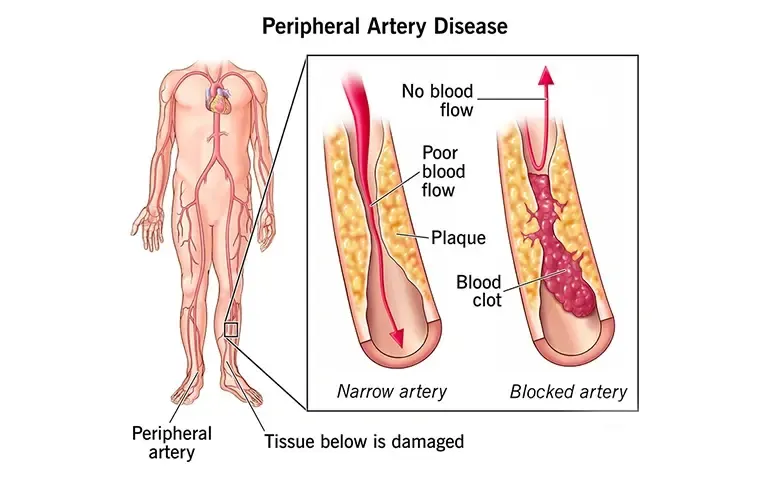
Peripheral Artery Disease (PAD) is a common circulatory condition in which narrowed or blocked arteries reduce blood flow, most often to the legs and feet. In its early stages, PAD may cause mild symptoms that can easily be mistaken for normal tiredness, muscle pain, or the effects of aging. Recognizing the warning signs early can help patients seek appropriate medical evaluation and treatment.
At One Stop Vascular Solutions, our vascular specialists provide evaluation and personalized treatment for patients experiencing symptoms associated with peripheral artery disease and other vascular conditions.
What Is Peripheral Artery Disease?
Peripheral Artery Disease occurs when arteries outside the heart and brain become narrowed or blocked. The condition most commonly affects the arteries supplying blood to the legs.
A major cause of PAD is atherosclerosis, in which plaque builds up inside the arteries. As the arteries become narrower, less oxygen-rich blood reaches the muscles and tissues of the legs and feet.
Some people with PAD may have few or no obvious symptoms initially. Others may develop noticeable leg discomfort, changes in the feet, or wounds that heal slowly.
What Are the Early Symptoms of PAD?
The symptoms of Peripheral Artery Disease can vary from person to person. Some of the most common early warning signs include:
1. Leg Pain While Walking
One of the classic symptoms of PAD is pain, cramping, or aching in the legs during walking or exercise.
This is often called intermittent claudication. The discomfort typically appears after walking a certain distance and improves after resting.
For example, a person may experience calf pain after walking for several minutes, which improves when they stop. The pain may return when they start walking again.
2. Leg Fatigue or Weakness
Reduced blood flow can cause the muscles to receive less oxygen during physical activity. This may result in:
- Leg heaviness
- Muscle fatigue
- Weakness
- Reduced walking ability
- Difficulty walking long distances
These symptoms may gradually become more noticeable over time.
3. Cold Feet or Toes
Poor circulation can cause one foot or leg to feel colder than the other.
Persistent coldness in the feet or toes, particularly when accompanied by other circulation-related symptoms, should be evaluated by a healthcare professional.
4. Numbness or Tingling
Some people with PAD experience numbness, tingling, or unusual sensations in their legs or feet.
Although these symptoms can have many possible causes, persistent numbness combined with other signs of poor circulation should not be ignored.
5. Changes in Skin Color
Reduced blood flow may cause changes in the appearance of the skin.
The affected foot or leg may appear:
- Pale
- Bluish
- Reddish
- Discolored compared with the other leg
Changes in skin color can be particularly important when they occur together with pain, coldness, or wounds.
6. Slow-Healing Wounds
A wound, cut, blister, or ulcer on the foot or leg that takes unusually long to heal can be a warning sign of reduced blood circulation.
Adequate blood flow is important because tissues require oxygen and nutrients to repair themselves. When circulation is significantly reduced, wounds may heal slowly and may be more vulnerable to infection.
People with diabetes should be especially attentive to foot wounds and changes.
7. Hair Loss on the Legs
Reduced circulation may sometimes be associated with decreased hair growth on the lower legs and feet.
Hair loss by itself does not mean that a person has PAD, but when it occurs alongside other circulation symptoms, medical evaluation may be appropriate.
8. Changes in Toenails
Poor circulation can sometimes contribute to slow nail growth or changes in the appearance of toenails.
Again, nail changes can have many causes, so they should be considered together with other symptoms and medical risk factors.
9. Pain at Rest
As PAD becomes more advanced, pain may occur even when a person is not walking.
Rest pain can be particularly noticeable at night and may affect the foot or toes. This can indicate more severe arterial disease and requires prompt medical assessment.
10. Erectile Dysfunction in Men
PAD affects blood vessels throughout the body. Reduced blood flow can sometimes contribute to erectile dysfunction in men.
When erectile dysfunction occurs alongside other symptoms or cardiovascular risk factors, vascular disease may be one of the conditions that a doctor considers during evaluation.
What Causes Peripheral Artery Disease?
Atherosclerosis is the most common cause of PAD. Several factors can increase the likelihood of developing arterial plaque and peripheral artery disease.
Important risk factors include:
- Smoking or tobacco use
- Diabetes
- High blood pressure
- High cholesterol
- Increasing age
- Obesity
- Physical inactivity
- Family history of cardiovascular disease
- Existing heart or blood vessel disease
People with multiple risk factors may have a greater likelihood of developing PAD.
Who Is at Higher Risk of PAD?
PAD becomes more common with increasing age, particularly in people who have cardiovascular risk factors.
People who may be at higher risk include those with:
Diabetes
Diabetes can affect blood vessels and increase the risk of atherosclerosis and peripheral artery disease.
Smoking History
Smoking can damage blood vessels and significantly increase the risk of PAD. Stopping smoking is an important part of vascular health.
High Blood Pressure
Long-term uncontrolled hypertension can contribute to damage within the arteries and increase cardiovascular risk.
High Cholesterol
High levels of LDL cholesterol can contribute to plaque formation inside the arteries.
Previous Cardiovascular Disease
People with coronary artery disease, stroke, or other forms of atherosclerotic disease may also have an increased risk of PAD.
How Is Peripheral Artery Disease Diagnosed?
If PAD is suspected, a vascular specialist may review the patient's symptoms, medical history, and risk factors before performing a physical examination.
Depending on the individual situation, diagnostic tests may include:
Ankle-Brachial Index (ABI)
The Ankle-Brachial Index compares blood pressure measurements taken at the ankle and arm. It is a commonly used non-invasive test for assessing blood flow to the legs.
Doppler Ultrasound
A Doppler ultrasound can evaluate blood flow through the arteries and help identify areas where blood flow may be reduced or abnormal.
CT Angiography or MR Angiography
Advanced imaging may be recommended when more detailed information about the blood vessels is needed.
Angiography
In selected cases, angiography may be used to obtain detailed images of the arteries and help plan treatment.
The appropriate diagnostic test depends on the patient's symptoms, examination findings, medical history, and suspected severity of disease.
How Is PAD Treated?
Treatment depends on the severity of PAD, the symptoms, the location of arterial narrowing or blockage, and the patient's overall health.
Treatment may include:
Lifestyle Changes
Patients may be advised to:
- Stop smoking
- Exercise regularly as medically appropriate
- Maintain a healthy weight
- Follow a heart-healthy diet
- Control blood pressure
- Manage cholesterol
- Maintain good blood sugar control if they have diabetes
Medications
Depending on the patient's condition, doctors may prescribe medications to reduce cardiovascular risk, manage cholesterol or blood pressure, or reduce the risk of blood clots.
Supervised Exercise
A structured exercise program may help improve walking ability and reduce symptoms in appropriate patients.
Angioplasty and Stenting
For selected patients with significant arterial narrowing or blockage, an endovascular procedure such as angioplasty may be considered. A balloon catheter is used to improve blood flow through the affected artery, and a stent may sometimes be placed.
Bypass Surgery
In certain severe or complex cases, bypass surgery may be recommended to create an alternative pathway for blood flow around a blocked artery.
A qualified vascular specialist should always individualize treatment.
When Should You See a Vascular Specialist?
You should consider medical evaluation if you experience persistent or recurring:
- Leg pain while walking
- Unexplained leg weakness
- Cold feet or toes
- Numbness or tingling
- Changes in skin color
- Slow-healing wounds
- Foot ulcers
- Pain in the legs at rest
People with diabetes, a history of smoking, or multiple cardiovascular risk factors should be particularly attentive to changes in their feet and legs.
Severe or rapidly worsening pain, sudden coldness, significant color change, numbness, weakness, or a non-healing wound may require urgent medical assessment.
Can PAD Be Prevented?
Not every case of PAD can be prevented, but managing cardiovascular risk factors can help reduce the risk and support overall vascular health.
Important steps include:
- Avoiding tobacco
- Managing diabetes
- Controlling blood pressure
- Managing cholesterol
- Maintaining a healthy weight
- Staying physically active
- Following a balanced diet
- Attending regular medical check-ups when appropriate
Peripheral Artery Disease Treatment in Hyderabad
Peripheral Artery Disease can affect walking ability, quality of life, and the health of the legs and feet. Recognizing symptoms early and obtaining an appropriate evaluation can help identify circulation problems before they become more serious.
At One Stop Vascular Solutions, our vascular specialists provide evaluation and personalized management for peripheral artery disease and other vascular conditions. Treatment is selected according to the patient's symptoms, diagnostic findings, and overall health.
If you are experiencing symptoms such as recurring leg pain while walking, cold feet, numbness, skin changes, or slow-healing wounds, speak with a qualified vascular specialist for appropriate evaluation.
Conclusion
Peripheral Artery Disease can begin with symptoms that may appear minor, such as leg discomfort while walking, cold feet, numbness, or reduced walking ability. Paying attention to these changes is important, particularly for people with diabetes, smoking history, high blood pressure, high cholesterol, or other cardiovascular risk factors.
Early evaluation can help determine whether symptoms are related to PAD or another condition and allow an appropriate treatment plan to be developed.
If you are experiencing possible symptoms of Peripheral Artery Disease in Hyderabad, consult a qualified vascular specialist for a proper evaluation and personalized medical advice.
Take the Next Step Toward Better Vascular Health
Experiencing leg pain while walking, cold feet, numbness, or slow-healing wounds? Early evaluation can help identify Peripheral Artery Disease and determine the right treatment approach.
Consult a Vascular Specialist at One Stop Vascular Solutions today.