Mesenteric Vasculature: Comprehensive Guide to Anatomy and Pathologies
Vascular Surgery

Mesenteric Vasculature: Comprehensive Guide to Anatomy and Pathologies

The mesenteric vasculature supplies blood to the intestines and includes both arterial and venous systems. Understanding the anatomy and common pathologies affecting this vasculature is crucial for diagnosing and treating conditions that can significantly impact gastrointestinal health.
Mesenteric Vasculature: Comprehensive Guide to Anatomy and Pathologies

Arterial Mesenteric Anatomy

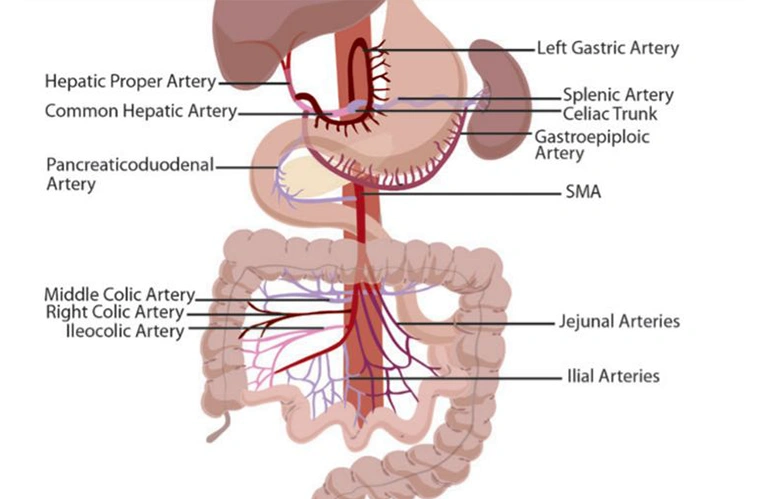
The arterial mesenteric system comprises the superior mesenteric artery (SMA) and the inferior mesenteric artery (IMA), which provide blood to the intestines.

Superior Mesenteric Artery (SMA)

Origin: Arises from the anterior surface of the abdominal aorta.
Branches: Includes intestinal branches, ileocolic artery, right colic artery, and middle colic artery.
Function: Supplies blood to the small intestine and part of the large intestine.

Inferior Mesenteric Artery (IMA)

Origin: Arises from the anterior surface of the abdominal aorta below the SMA.
Branches: Includes left colic artery, sigmoid arteries, and superior rectal artery.
Function: Supplies blood to the distal part of the large intestine.

Venous Mesenteric Anatomy

The venous mesenteric system comprises the superior mesenteric vein (SMV) and inferior mesenteric vein (IMV), which drain blood from the intestines.

Superior Mesenteric Vein (SMV)

Function: Drains blood from the small intestine, cecum, and ascending colon.
Pathway: Joins with the splenic vein to form the portal vein.

Inferior Mesenteric Vein (IMV)

Function: Drains blood from the distal part of the large intestine.
Pathway: Typically drains into the splenic vein.

Acute Mesenteric Ischemia

Acute mesenteric ischemia is a sudden decrease in blood flow to the intestines, leading to tissue damage.

Symptoms

Severe abdominal pain
Nausea and vomiting
Diarrhea or bloody stools
Abdominal distension

Treatment Options

Immediate Interventions: Thrombolysis, angioplasty, or surgery to restore blood flow.
Medications: Anticoagulants to prevent further clotting.
Surgery: Resection of necrotic bowel segments.

Importance of Long-Term Follow-Up

Monitoring: Regular imaging and blood tests to ensure restored blood flow.
Lifestyle Adjustments: Dietary changes and management of underlying conditions such as atherosclerosis.

Chronic Mesenteric Ischemia

Chronic mesenteric ischemia, also known as intestinal angina, is due to long-term reduced blood flow to the intestines.

Symptoms

Postprandial abdominal pain
Weight loss
Fear of eating (sitophobia)
Diarrhea

Treatment Options

Lifestyle Modifications: Dietary changes to reduce meal size and frequency.
Medications: Anticoagulants and vasodilators.
Surgical Options: Angioplasty, stenting, or bypass surgery to improve blood flow.

Importance of Long-Term Follow-Up

Regular Check-Ups: To monitor for recurrence or progression of disease.
Managing Risk Factors: Controlling diabetes, hypertension, and hyperlipidemia.

Mesenteric Venous Thrombosis

Mesenteric venous thrombosis occurs when blood clots form in the mesenteric veins, obstructing blood flow from the intestines.

Symptoms

Abdominal pain
Nausea and vomiting
Diarrhea
Blood in stools

Treatment Options

Anticoagulation Therapy: To dissolve clots and prevent new ones.
Surgery: In severe cases, to remove clots or resect necrotic bowel.

Importance of Long-Term Follow-Up

Monitoring: Regular blood tests and imaging to assess clot resolution.
Lifestyle and Medication Adherence: Ensuring adherence to anticoagulant therapy and managing underlying conditions.

Portal Vein Thrombosis

Portal vein thrombosis is the formation of a blood clot in the portal vein, which can obstruct blood flow to the liver.

Symptoms

Abdominal pain
Swelling of the abdomen (ascites)
Gastrointestinal bleeding
Encephalopathy (in severe cases)

Treatment Options

Anticoagulation: Primary treatment to dissolve the clot.
Thrombolytic Therapy: In selected cases to rapidly dissolve clots.
Interventions: TIPS (transjugular intrahepatic portosystemic shunt) in severe cases.

Importance of Long-Term Follow-Up

Regular Monitoring: Ultrasound or CT scans to ensure the clot has resolved.
Managing Risk Factors: Preventing recurrence by managing underlying conditions such as liver disease.
GOT QUESTIONS?

Frequently Asked Questions (FAQs)

What causes mesenteric ischemia?

Mesenteric ischemia is caused by reduced blood flow to the intestines, which can result from blood clots, arterial blockage, or low blood pressure.

How is mesenteric ischemia diagnosed?

Can mesenteric venous thrombosis be cured?

What is the prognosis for portal vein thrombosis?

Why is long-term follow-up important for these conditions?

Conclusion

Understanding the mesenteric vasculature and related pathologies is vital for diagnosing and treating conditions that can significantly impact gastrointestinal health.