Varicose veins are a common vein condition that many people live with for years. In the early stages, they may appear as enlarged, twisted veins on the legs, causing minor discomfort. However, for some individuals, these veins gradually worsen and begin to affect daily comfort and overall leg health. Understanding when varicose veins need treatment helps patients make timely, informed decisions and avoid preventable complications.
This guide explains when varicose veins can be safely monitored and when medical treatment becomes essential, using clear, patient-friendly language.
Can Varicose Veins Be Left Untreated?
Mild varicose veins without symptoms do not always require immediate medical intervention. Some people experience only cosmetic concerns and may manage early symptoms with lifestyle measures such as exercise, leg elevation, or compression stockings.
However, varicose veins are caused by faulty vein valves that allow blood to flow backward and pool in the legs. Over time, this underlying problem can progress. That is why doctors closely monitor symptoms rather than appearance alone when deciding when varicose veins need treatment.
If discomfort increases or skin changes develop, medical evaluation is recommended to prevent further vein damage.
Why Do Varicose Veins Worsen Over Time?
Varicose veins tend to progress because the weakened vein valves do not repair themselves. Factors that can contribute to worsening include:
- Prolonged standing or sitting
- Aging and natural loss of vein elasticity
- Pregnancy and hormonal changes
- Obesity, which increases pressure on leg veins
- Family history of venous disease
As pressure builds in the veins, symptoms may shift from mild heaviness to more severe varicose vein symptoms, signalling the need for medical attention.
Warning Signs of Severe Varicose Veins
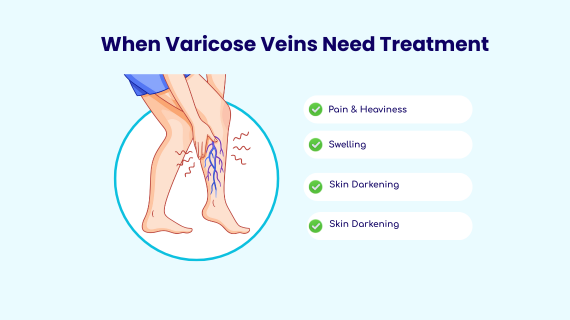
Specific symptoms suggest that varicose veins are no longer just a cosmetic concern. These varicose veins warning signs indicate that evaluation by a specialist is essential:
- Persistent leg pain, aching, or throbbing
- Swelling in the ankles or lower legs, especially in the evening
- Skin discolouration or darkening around the ankles
- Problematic, tender veins or areas of inflammation
- Itching, dryness, or eczema-like skin changes
- Non-healing sores or ulcers near the ankle
These signs may point to circulation problems that require professional care rather than home management.
Consult a Vascular Surgeon in Hyderabad
Risks and Complications of Untreated Varicose Veins
Delaying treatment may increase the risk of complications from varicose veins. While not everyone will experience serious issues, understanding the dangers of untreated varicose veins risks helps patients make proactive choices.
Possible complications include:
- Chronic venous insufficiency: Long-term poor blood return from the legs
- Skin damage: Thickened, discoloured, or fragile skin around the ankles
- Venous ulcers: Painful, slow-healing wounds that need medical care
- Bleeding: Varicose veins close to the skin can rupture easily
- Superficial thrombophlebitis: Painful inflammation or clotting in surface veins
These complications usually develop gradually, which is why early assessment is emphasised in modern vein care.
When to Consult a Vascular Surgeon
A consultation with a vascular surgeon is advised when:
- Symptoms interfere with daily activities or sleep
- Swelling or pain persists despite lifestyle changes
- Skin changes or ulcers appear
- There is a history of blood clots or venous disease
- You are unsure when varicose veins need treatment based on symptoms
Vascular surgeons use clinical evaluation and ultrasound imaging to determine vein function and recommend appropriate treatment options, which may include minimally invasive procedures.
Importance of Early Treatment
Seeking care early does not always mean surgery. Modern treatment approaches are often minimally invasive and focused on improving circulation while relieving symptoms. Early treatment can:
- Reduce discomfort and swelling
- Prevent progression to severe disease
- Lower the risk of skin damage and ulcers
- Improve long-term leg health and quality of life
Timely evaluation allows patients to choose treatment at the right stage, rather than waiting until symptoms become difficult to manage.
Key Takeaway
Varicose veins should not be ignored when symptoms progress. Paying attention to varicose veins warning signs and understanding the risks of delay empowers patients to seek care with confidence and clarity.
Leave a Reply