Varicose veins are more than a cosmetic issue. They can cause pain, swelling, heaviness, skin changes, and, if ignored, serious complications. Fortunately, advances in vascular care now offer multiple varicose vein treatment options that are safer, more effective, and far less invasive than traditional methods.
Understanding how each treatment works—and which one is right for your condition—is key to long-term relief and healthy circulation.
Why Treatment Choice Matters
Not all varicose veins are the same. Some involve superficial veins, while others involve deeper vein valve failure. Choosing the wrong treatment may lead to incomplete relief or recurrence.
A proper evaluation by a vascular surgeon helps determine:
- The severity of vein damage
- Whether deep or superficial veins are involved
- The most effective and least invasive option
Modern treatment focuses on addressing the root cause rather than just visible veins.
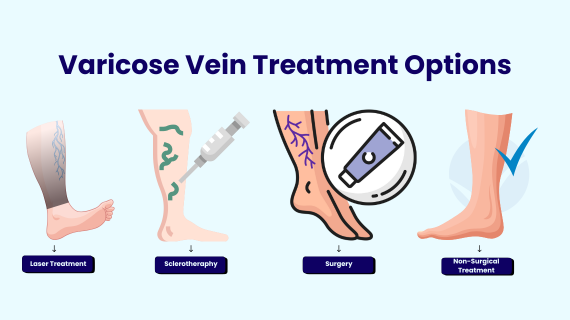
Laser Treatment for Varicose Veins
Laser treatment for varicose veins, also known as endovenous laser ablation (EVLA), is one of the most advanced and commonly recommended treatments today.
How it works
A thin laser fibre is inserted into the affected vein under ultrasound guidance. Heat energy seals the faulty vein, allowing blood to reroute through healthy veins.
Benefits
- Minimally invasive
- Performed under local anesthesia
- No stitches or large scars
- High success rate
- Faster recovery compared to surgery
Recovery time
Most patients resume normal activities within 24–48 hours.
Limitations
- May not be suitable for extremely twisted or very large veins
- Requires expertise and ultrasound guidance
Laser treatment has largely replaced traditional surgery in many patients due to its safety and effectiveness.
Surgical Treatment for Varicose Veins
Surgical treatment, often called vein stripping or ligation, is the older, conventional approach.
How it works
The affected vein is tied off and removed through small incisions, usually under spinal or general anesthesia.
Benefits
- Effective for advanced or complex cases
- Suitable when minimally invasive options are not possible
Recovery time
Recovery may take 2–4 weeks, depending on the extent of surgery.
Limitations
- More invasive than modern techniques
- Longer recovery period
- Higher risk of pain, bruising, and scarring
When comparing varicose vein surgery vs laser treatment, laser is usually preferred when clinically appropriate due to faster recovery and fewer complications.
Non-Surgical Varicose Vein Treatments
Several non-surgical varicose vein treatment options are available, often used for early-stage disease or as supportive care.
Common non-surgical methods
- Sclerotherapy: An Injection that closes small varicose or spider veins
- Compression therapy: Medical-grade compression stockings
- Lifestyle modifications: Weight management, exercise, leg elevation
Benefits
- No incisions or anesthesia
- Helpful for mild symptoms or cosmetic concerns
Limitations
- Do not correct underlying vein valve failure
- Symptoms may return if used alone
- Not suitable for advanced varicose veins
Non-surgical methods are often combined with laser or other procedures for optimal results.
Which Varicose Vein Treatment Is Best for You?
There is no single best treatment for varicose veins for everyone. The ideal option depends on:
- Severity of symptoms
- Vein anatomy
- Presence of complications
- Overall health
In most cases, modern minimally invasive treatments, such as laser therapy, offer excellent outcomes with minimal downtime. However, only a vascular surgeon can determine the most appropriate approach after a detailed clinical and ultrasound evaluation.
If you are considering expert care, explore varicose vein treatment in Hyderabad with a specialised vascular team for accurate diagnosis and personalized treatment planning.
Book a Varicose Vein Consultation in Hyderabad
Early evaluation leads to better outcomes, faster recovery, and long-lasting relief. If you’re experiencing symptoms such as leg pain, swelling, or visible bulging veins, a professional consultation is the right first step.
Leave a Reply